Sophos for Business Security and IT Operations
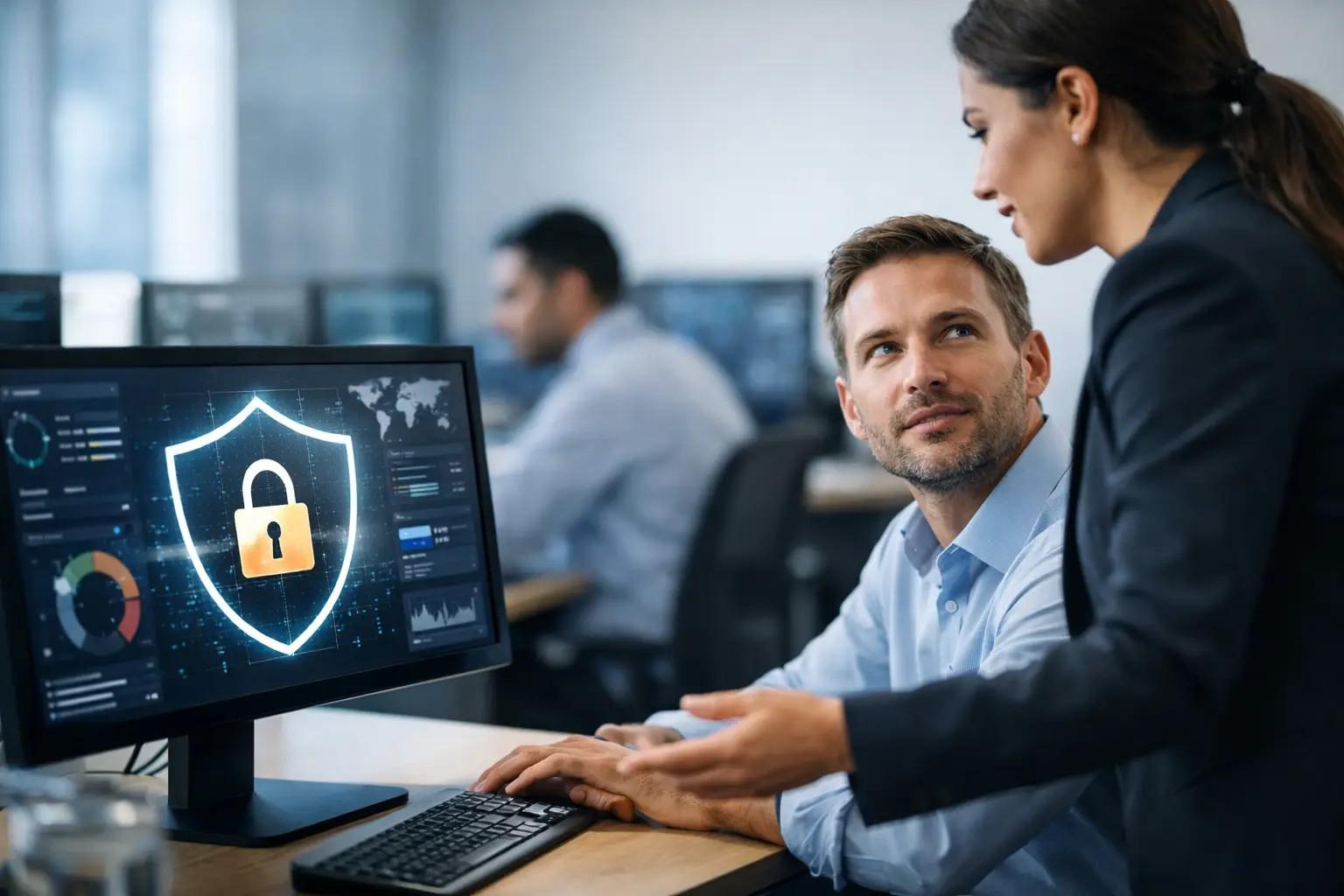
A ransomware event rarely starts with an obvious failure. It often begins with one unmanaged laptop, a reused credential, an exposed remote service, or a firewall rule nobody revisited after a project ended. Sophos gives businesses a broad set of controls to reduce those openings, but buying security software is not the same as operating security. The difference is the people, processes, monitoring, and accountability around the platform.
For organizations without a large internal security team, Sophos can be a practical foundation for endpoint protection, managed detection and response, firewall security, email protection, and mobile device controls. Its value is strongest when the tools are configured as part of a wider operating model that includes identity security, patching, backup recovery, network management, vulnerability remediation, and incident response.
Where Sophos Fits in a Business Security Strategy
Sophos is best understood as a security platform family rather than a single product. A business may use Sophos Endpoint for device protection, Sophos Firewall for network enforcement, Sophos Email for message security, and Sophos MDR for around-the-clock investigation and response. Sophos Central provides the cloud-based management layer that brings much of this administration together.
That breadth can simplify the technology stack. Endpoint and firewall telemetry can be correlated, policies can be managed from a common console, and security teams have fewer disconnected tools to review. For a midsize organization, this may reduce operational friction compared with assembling products from several vendors without a clear integration plan.
The trade-off is that a platform approach should not become a blind commitment to one vendor. Sophos may be an excellent fit for endpoint and firewall security while another product better serves SIEM, identity governance, data classification, or specialized cloud workload protection. Good security architecture selects the right controls for the risk, integration requirements, and internal skills available.
Sophos Endpoint Protection Is Only the Starting Point
Sophos endpoint products help detect malware, ransomware behavior, malicious scripts, exploit activity, and suspicious application behavior across Windows, macOS, Linux, and mobile environments. Features such as endpoint detection and response can give administrators visibility into processes, user activity, persistence mechanisms, and potential attack paths that traditional antivirus products may miss.
However, endpoint software cannot compensate for weak administration. If local administrator rights are broadly assigned, operating systems remain unpatched, device inventories are incomplete, or inactive accounts remain enabled, attackers will still find opportunities. Endpoint agents also need health monitoring. A device without an active, current agent may look protected in an asset spreadsheet while presenting a real gap.
An effective endpoint program answers practical questions: Which devices must be protected? Who owns exceptions? How quickly are alerts reviewed? What happens when a device is isolated? Is there a documented method to restore business activity safely? These decisions should be agreed upon before an incident, not improvised during one.
XDR and MDR Change the Operating Model
- Extended detection and response collects and correlates signals across endpoints, identity systems, email, and other security sources. This can improve detection quality, especially when an attack moves from a phishing message to a compromised account and then to a device or server.
- MDR adds a human-led security operations capability. Sophos MDR analysts can investigate alerts and, depending on the agreed service model and permissions, take response actions such as isolating endpoints or disrupting malicious activity. This is particularly valuable for businesses that cannot staff a 24/7 security operations center.
MDR is not an excuse to disengage from security ownership. The provider still needs current escalation contacts, approved response authority, knowledge of critical systems, and a tested communications process. If analysts cannot reach the right decision-maker during an incident, even a strong detection service can lose valuable time.
Sophos Firewall Requires Ongoing Network Discipline
A next-generation firewall does far more than allow or deny traffic by port. Sophos Firewall can support intrusion prevention, web filtering, application control, VPN access, segmentation, encrypted traffic inspection, and threat intelligence-driven controls. In environments that also use Sophos endpoints, synchronized security capabilities can help the firewall respond to endpoint risk signals.
These capabilities are useful, but they require careful design. Enabling deep inspection without testing can affect applications that rely on certificate pinning or unusual encryption behavior. Tight web and application policies may frustrate users if exceptions are unmanaged. Segmentation can limit lateral movement, but only if network dependencies are mapped before policy changes are pushed.
A firewall deployment should begin with an accurate network picture: internet-facing services, remote access methods, wireless networks, servers, cloud connections, third-party integrations, and business-critical traffic flows. From there, rules should follow least-privilege principles and be reviewed regularly. Temporary rules have a habit of becoming permanent unless someone owns their expiration.
For hybrid organizations, firewall management also needs to align with Microsoft 365, Azure, AWS, branch locations, remote users, and cloud-native controls. A physical or virtual firewall is one layer of the architecture, not the entire perimeter.
Email, Identity, and Backup Must Work Alongside Sophos
- Email remains one of the most common entry points for business compromise. Sophos Email can help filter phishing, impersonation, malware, and unwanted messages. Yet email defense works best when paired with Microsoft 365 configuration, multifactor authentication, conditional access, domain protection records, user education, and disciplined account lifecycle management.
- Identity deserves particular attention. An attacker who obtains valid credentials may bypass many traditional perimeter controls. Multifactor authentication should protect administrative accounts, remote access, cloud services, and high-risk applications. Privileged accounts should be limited, monitored, and separated from normal daily-use identities. Security logs from identity providers should also be available to the team responsible for detection and response.
- Backups are equally essential. Sophos can help stop or contain ransomware activity, but no prevention tool can promise that every incident will be blocked. Businesses need immutable or otherwise protected backup copies, defined recovery objectives, and regular recovery tests. The only meaningful backup is one that can restore the applications, databases, files, and configurations the business needs within an acceptable time.
How to Operate Sophos Without Creating Another Security Silo
The most common mistake is treating Sophos Central as a console that someone checks only after receiving an alert email. Security tools create operational value when they are part of a recurring management rhythm.
That rhythm should include daily alert triage, weekly review of endpoint and protection health, monthly policy and exception review, vulnerability remediation coordination, and periodic incident-response exercises. Executive reporting should focus on business-relevant measures: unmanaged devices, critical vulnerabilities, phishing exposure, detection trends, recovery readiness, and outstanding risk decisions.
Integration matters as well. Sophos alerts may need to feed a SIEM and SOAR platform, ticketing system, or managed SOC workflow. Firewall events should be correlated with endpoint and identity activity. When a serious event occurs, the response team needs a single incident record rather than separate notes across vendor portals and email threads.
This is where a full-lifecycle managed provider can help. AdvisionIT as a Platinum Sophos Partner can combine Sophos administration with Microsoft, Linux, Network, Cloud, Backup, vulnerability, and security operations expertise, so findings lead to remediation rather than another dashboard for an internal team to manage.
Selecting the Right Sophos Scope
The right scope depends on the organization. A smaller business with cloud email, managed endpoints, and no internal security team may prioritize endpoint protection, email security, MDR, multifactor authentication, and tested backup. A distributed organization may add managed firewalls, secure remote access, segmentation, and centralized network monitoring. A regulated business may need documented policies, risk reporting, log retention, vulnerability management, and evidence that supports audit or NIS2-related governance obligations.
Cost should be evaluated beyond license pricing. Consider implementation effort, monitoring requirements, incident response coverage, internal administration time, integration work, and the financial impact of downtime. A lower-cost license can become expensive if no one has the capacity to tune policies, investigate alerts, or maintain the surrounding environment.
Sophos can be a strong security investment when it is matched to clear risks, configured for the environment, and supported by accountable operations. The most useful next step is not simply choosing more tools. It is identifying the controls your business relies on, the gaps between them, and who will act when those controls signal that something is wrong.
Q&A Section: Sophos for Business Security and IT Operations
1. What makes Sophos suitable for modern business security?
Sophos provides unified protection across endpoints, networks, cloud workloads, and identities. Its strength lies in combining AI‑driven threat detection with automated response, giving businesses a security foundation that is both proactive and adaptive.
2. How does Sophos improve IT operations, not just security?
Sophos Central consolidates management into one dashboard, reducing operational overhead. IT teams gain visibility, automated patching, policy enforcement, and real‑time alerts — all of which streamline daily operations and reduce manual workload.
3. What is Sophos Central and why is it important?
Sophos Central is the cloud‑based management platform that controls all Sophos products. It enables centralized monitoring, policy management, reporting, and automated remediation, making it ideal for distributed teams and hybrid environments.
4. How does Sophos use AI to detect threats?
Sophos uses machine learning models trained on millions of threat samples. These models identify suspicious behavior, block unknown malware, and prevent zero‑day attacks — even before traditional signatures are available.
5. What role does Sophos play in ransomware prevention?
Sophos Intercept X includes anti‑ransomware technology that stops malicious encryption, isolates infected devices, and rolls back changes. This drastically reduces the impact of ransomware attacks and protects business continuity.
6. Can Sophos help with compliance requirements like GDPR and NIS2?
Yes. Sophos provides logging, reporting, encryption, identity protection, and incident response capabilities that support GDPR, NIS2, ISO 27001, and other regulatory frameworks. It helps organizations stay audit‑ready.
7. How does Sophos integrate with cloud environments?
Sophos protects cloud workloads, containers, and serverless functions. It integrates with AWS, Azure, and Google Cloud, offering workload scanning, firewalling, and posture management — essential for modern cloud‑native businesses.
8. Is Sophos suitable for small and medium businesses?
Absolutely. Sophos offers enterprise‑grade protection with SMB‑friendly pricing and simplified management. It’s ideal for companies without large internal security teams.
9. What makes Sophos different from other security vendors?
Sophos stands out with its unified ecosystem, AI‑powered detection, automated response, and centralized cloud management. It reduces complexity while increasing protection — a combination many vendors struggle to deliver.
Date: 17.07.2026

Written By
Yavor Y. Zlatev
CEO & Executive Director at Advanced Vision IT
Yavor leads strategic growth and technology operations at Advanced Vision IT, specializing in enterprise cybersecurity, cloud infrastructure, NIS2 compliance, and managed security service delivery. Find out more about me