Inquiry for Linux Managed Services
LINUX MANAGED SERVICES
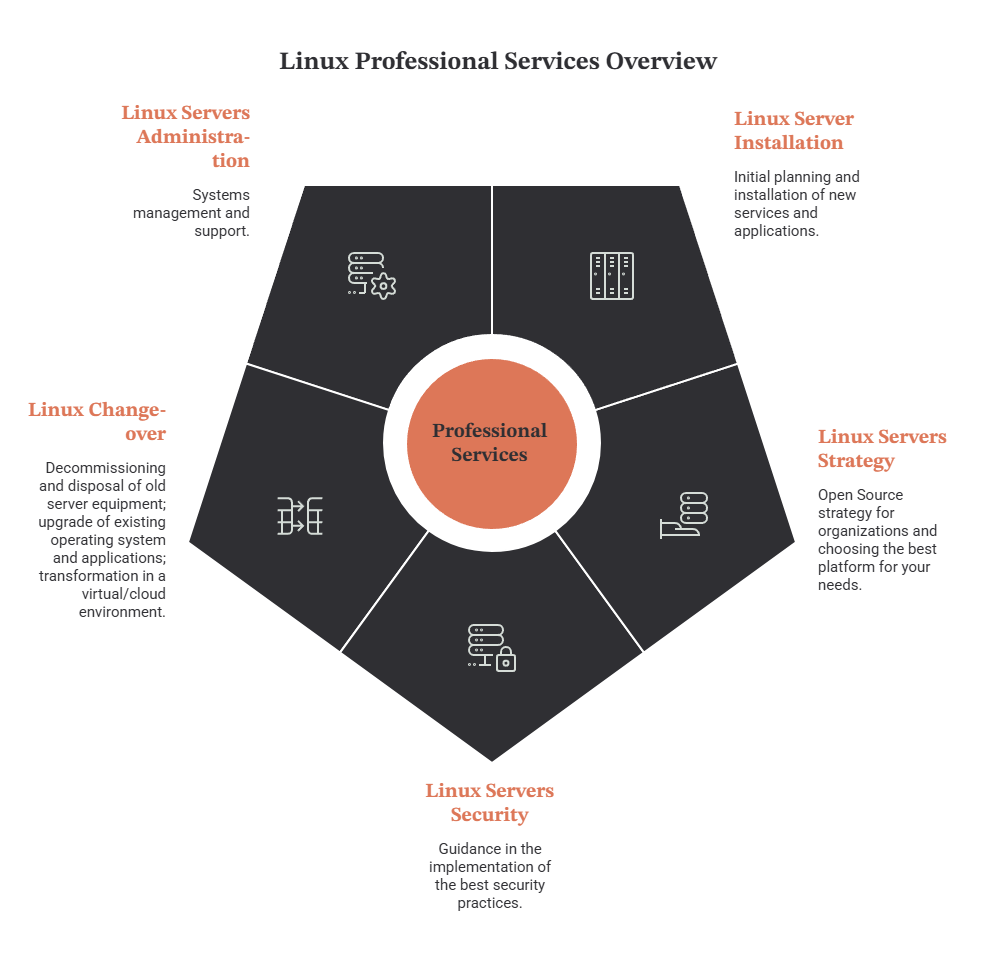
- LINUX SERVER'S INITIAL INSTALL: Initial planning and installation of new services and applications.
- LINUX SERVERS STRATEGY: Open Source strategy for organizations and choosing the best platform for your needs.
- LINUX SERVERS SECURITY: Guidance in the implementation of the best security practices.
- LINUX CHANGE-OVER: Decommissioning and disposal of old server equipment; upgrade of existing operating system and applications; transformation in a virtual/cloud environment.
- LINUX SERVERS ADMINISTRATION: Systems management and support.

Named Account Manager
for any business and Project related questions

Linux Engineers
available 24/7/365

Named Service Manager
for any technical questions

Professional Services

Architecture advisors

Managed Monitoring and Incident Response

Cloud & Virtualization experience

Security advisors
Linux Managed Services
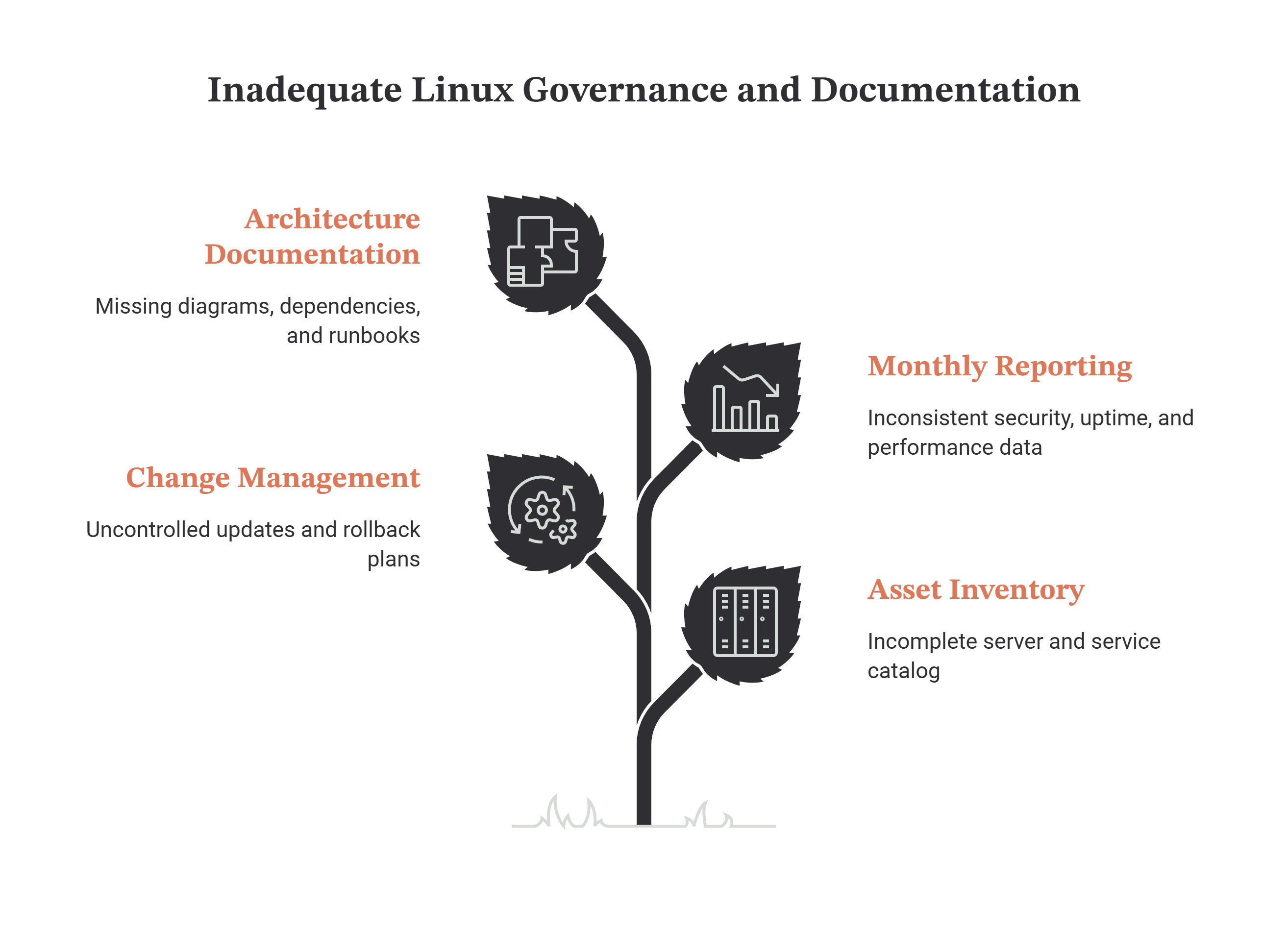
Detailed Service Portfolio that can fix all inadequate Linux Governance and Documentation
Linux environments form the backbone of modern digital infrastructure — powering cloud workloads, mission‑critical applications, databases, and high‑availability systems. AdvisionIT delivers full‑lifecycle Linux Managed Services designed for reliability, security, scalability, and operational excellence.
Our portfolio covers everything from daily administration to advanced architecture, automation, and cybersecurity governance.
1. Core Linux Administration & Operations
-
Linux Server Management — Full operational management of RHEL, Rocky, Ubuntu, Debian, Amazon Linux, SUSE.
-
User & Access Control — SSH hardening, sudo policies, MFA integration, key rotation.
-
Service & Process Management — Monitoring and tuning of systemd services, daemons, and critical processes.
-
Filesystem & Storage Management — LVM, RAID, NFS, SMB, EBS/EFS (AWS), quota policies, performance tuning.
-
Package & Dependency Management — Controlled updates, repository management, dependency resolution.
2. Security, Hardening & Compliance
-
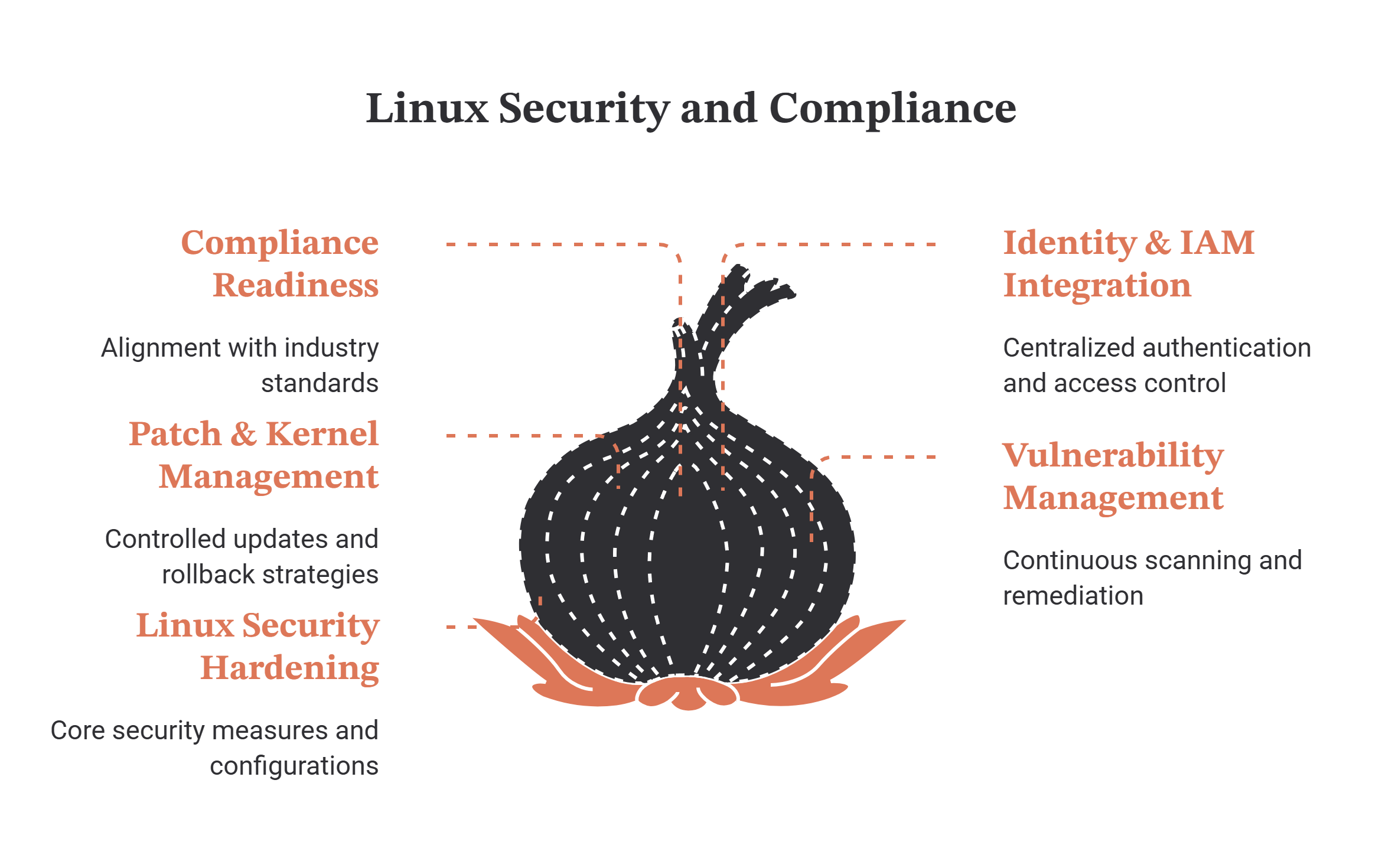
Linux Security Hardening — CIS benchmarks, kernel parameters, firewall policies, SELinux/AppArmor.
-
Vulnerability Management — Continuous scanning, prioritization, remediation, reporting.
-
Patch & Kernel Management — Controlled patch cycles, live kernel updates (where supported), rollback strategies.
-
Identity & IAM Integration — AD/LDAP/Entra ID integration, SSO, centralized authentication.
-
Compliance Readiness — NIS2, ISO 27001, PCI DSS, SOC2 alignment.
AdvisionIT strengthens this with CISO‑as‑a‑Service, providing governance, risk management, and executive‑level security leadership.
3. Monitoring, Observability & Incident Response
-
Advanced Monitoring — CPU, memory, disk, I/O, network, application metrics.
-
Log Management & SIEM Integration — Centralized logging, correlation, alerting, SOC integration.
-
Incident Response — Root‑cause analysis, forensic investigation, containment, recovery.
-
Performance Optimization — Kernel tuning, caching, load balancing, resource optimization.
4. Backup, Recovery & Business Continuity
-
Backup Strategy & Execution — File‑level, block‑level, snapshot‑based backups; cloud-native backups (AWS).
-
Disaster Recovery Planning — RPO/RTO definition, failover design, DR runbooks.
-
Recovery Testing — Scheduled restore tests, validation, documentation.
5. Cloud & Hybrid Linux Operations
-
AWS Linux Workload Management — EC2, ECS, EKS, Lambda integrations, IAM roles, VPC security.
-
Hybrid Infrastructure — On‑prem + cloud integration, VPN, Direct Connect, identity federation.
-
Cost Optimization — Rightsizing, reserved instances, autoscaling, storage lifecycle policies.
AdvisionIT’s certified AWS architects ensure cloud Linux environments are secure, scalable, and cost‑efficient.
6. DevOps, Automation & CI/CD
-
Infrastructure Automation — Ansible, Terraform, Bash/Python automation.
-
CI/CD Pipeline Integration — GitLab, GitHub Actions, Jenkins, ArgoCD.
-
Containerization & Orchestration — Docker, Podman, Kubernetes, Helm.
-
Configuration Management — Idempotent provisioning, drift detection, versioned infrastructure.
7. Web, Application & Database Stack Management
-
Web Servers — NGINX, Apache, HAProxy, reverse proxies, SSL/TLS lifecycle.
-
Application Runtimes — PHP-FPM, Node.js, Python, Java, Ruby.
-
Databases — MySQL/MariaDB, PostgreSQL, MongoDB, Redis, Elasticsearch.
-
High Availability — Clustering, replication, failover, load balancing.
8. Governance, Documentation & Reporting
-
Asset Inventory — Full catalog of servers, services, dependencies.
-
Change Management — Controlled updates, approvals, rollback plans.
-
Monthly Reporting — Security posture, uptime, incidents, performance, recommendations.
-
Architecture Documentation — Diagrams, dependencies, runbooks, SOPs.
9. Training & Capability Building
AdvisionIT enhances Linux operations with continuous education through:
-
CISOLead — executive cybersecurity leadership training
-
CISOEdu — practical cybersecurity courses, templates, governance materials
These platforms help clients build internal capability, reduce operational risk, and strengthen security culture.
The AdvisionIT Advantage
-
Full lifecycle ICT & Linux operations
-
ISO‑certified processes (9001, 27001, 20001)
-
Boutique, high‑touch service model
-
Proven experience in fintech, gaming, telecom, eCommerce, entertainment
-
Competitive pricing with enterprise‑grade quality
AdvisionIT transforms Linux environments into secure, stable, and scalable platforms that support long‑term business growth.
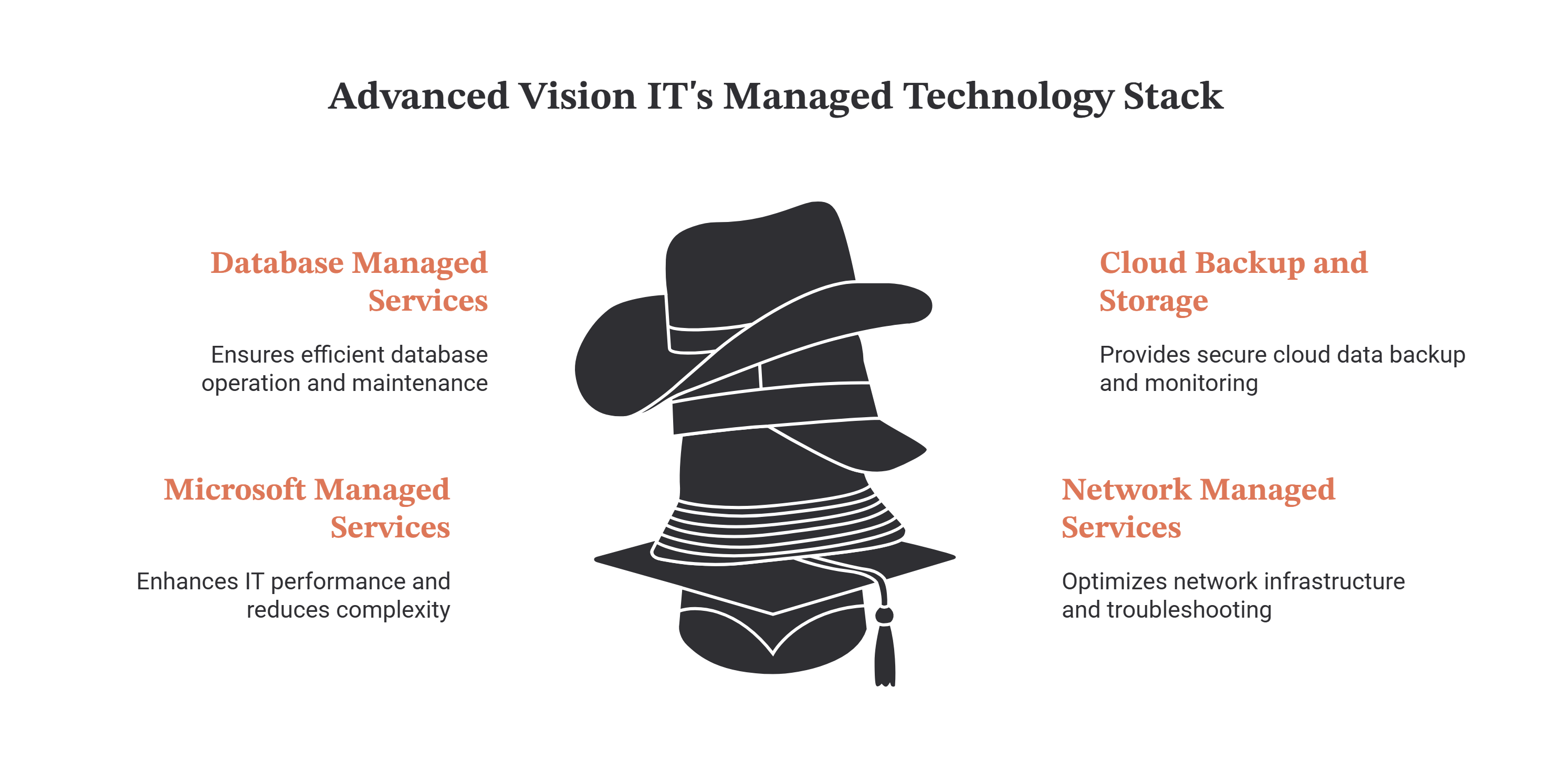
⇒ Advanced Vision IT Ltd Technology Stack & Products
Managed technology stack refers to a set of IT tools and services that are outsourced to the Advanced Vision IT team for management and maintenance. This typically includes hardware, software, network infrastructure, applications, and data storage. If you want to view some of the ADVANCED VISION IT's managed technology stack solutions, click on the links below.
- Microsoft Managed Services refer to a range of services that are provided by Microsoft or Microsoft partners to help organizations manage and maintain their IT infrastructure and services. These services are designed to help organizations improve their IT performance and reduce the cost and complexity of managing their IT systems.
- Network managed services refer to outsourcing management and maintenance of an organization's network infrastructure to a third-party service provider. This includes services such as monitoring, maintenance, troubleshooting, configuration, and optimization of network devices such as routers, switches, firewalls, and wireless access points.
- Database managed services refer to outsourcing the management and maintenance of databases to a third-party provider. With database-managed services, the provider takes care of the day-to-day operation and maintenance of databases, including tasks such as backups, patches, upgrades, monitoring, and performance tuning.
- Cloud backup and storage managed services are services that provide organizations with the ability to back up and store their data in the cloud while also providing management and monitoring of the backup and storage infrastructure.
FAQ: Linux Managed Services
-
What are Linux Managed Services?
Linux Managed Services provide full administration, monitoring, maintenance, and security for Linux servers and infrastructure. This includes system management, performance optimization, updates, security hardening, and 24/7 monitoring.
-
Which Linux distributions do you support?
We support all major Linux distributions: Ubuntu, Debian, CentOS, AlmaLinux, Rocky Linux, Red Hat Enterprise Linux (RHEL), SUSE, and more. We work with bare‑metal, virtualized, and cloud‑based Linux environments.
-
What tasks are included in daily Linux administration?
Daily administration includes resource monitoring, user management, service optimization (Apache, Nginx, MySQL, Docker), log analysis, updates, security checks, and incident response.
-
Do you provide 24/7 monitoring and incident response?
Yes — we offer 24/7 monitoring, automated alerts, incident response, problem analysis, and service recovery to ensure continuous uptime for critical systems.
-
Can you migrate Linux servers to the cloud?
Yes — we perform migrations to AWS, Azure, Google Cloud, and private cloud environments. This includes planning, workload assessment, service transfer, testing, and post‑migration optimization.
-
What security measures do you implement?
We apply security hardening, firewall configuration, SELinux/AppArmor policies, patch management, vulnerability scanning, log analysis, SIEM integration, and brute‑force protection.
-
Do you manage databases running on Linux?
Yes — we support MySQL, MariaDB, PostgreSQL, MongoDB, and others. Services include optimization, backup strategies, replication, monitoring, and recovery.
-
Can you fully manage our Linux servers?
Yes — we provide complete management: administration, monitoring, security, backups, optimization, application support, and infrastructure maintenance, allowing your business to focus on core operations.
-
What is included in Linux backup and disaster recovery?
This includes automated backups, off‑site storage, snapshots, rapid recovery, disaster recovery planning, and business continuity testing.
-
What are the benefits of outsourcing Linux administration?
Benefits include reduced costs, access to experts, improved security, better performance, 24/7 support, minimized downtime, and predictable monthly expenses.

Written By
Yavor Y. Zlatev
CEO & Executive Director at Advanced Vision IT
Yavor leads strategic growth and technology operations at Advanced Vision IT, specializing in enterprise cybersecurity, cloud infrastructure, NIS2 compliance, and managed security service delivery. Find out more about me