Sophos Firewall Rules: Best Rules and Optimization
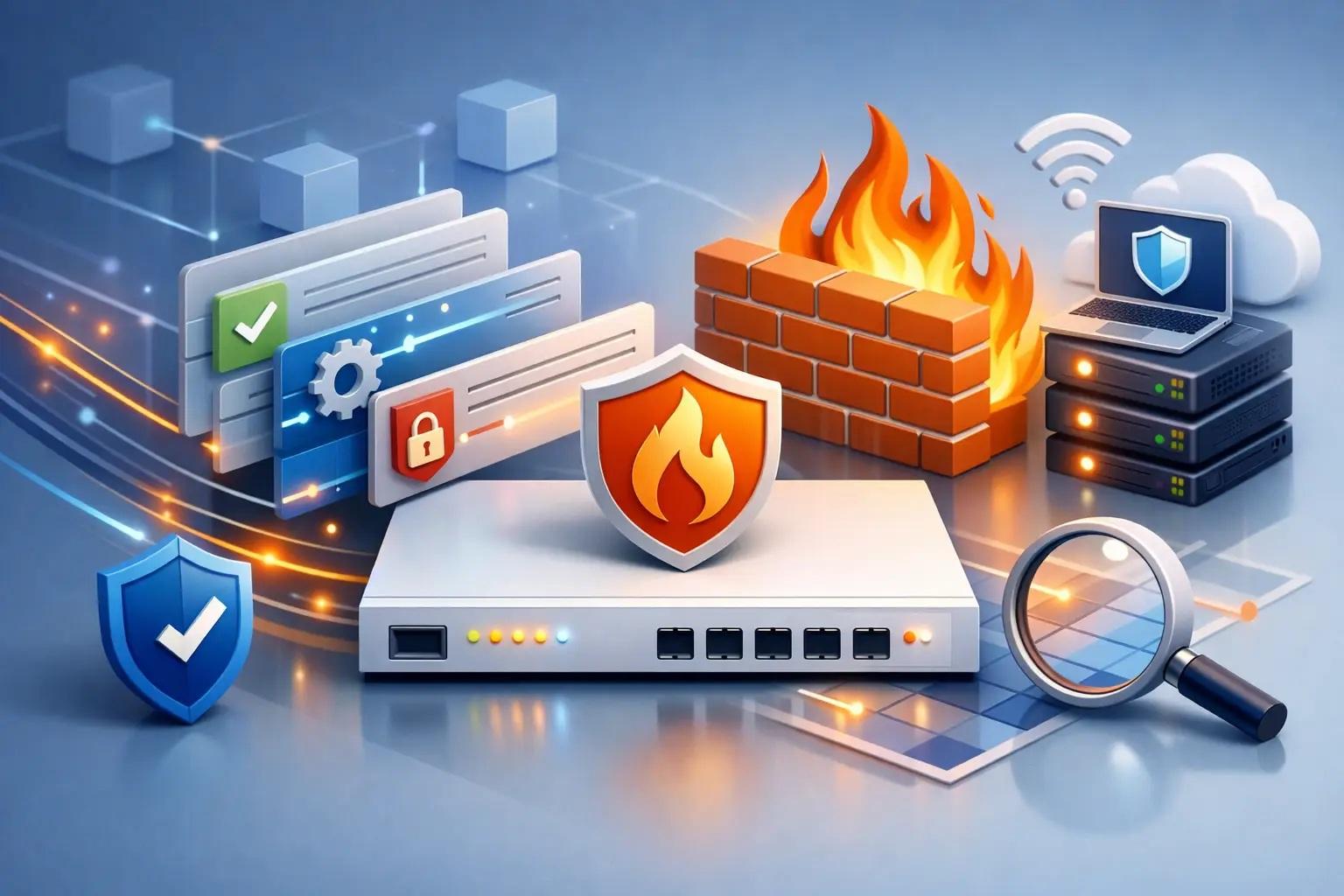
A firewall can be fully licensed, patched, and actively monitored yet still create avoidable risk if its policy set is poorly designed. Sophos Firewall rules optimization - the work behind what many teams call “best firewall rules” - determines which traffic reaches critical systems, which controls inspect it, and where business operations can fail unexpectedly. For growing organizations, rule quality is not an administrative detail. It is a direct contributor to security posture, uptime, audit readiness, and support cost.
The goal is not simply to make the firewall stricter. A rule set that blocks legitimate business traffic without a disciplined exception process will push users toward workarounds and generate avoidable service tickets. The right approach is a policy structure that defaults to least privilege, remains understandable under pressure, and can adapt as applications, cloud services, and users change.
What Best Firewall Rules Actually Mean
There is no universal Sophos Firewall configuration that qualifies as the best firewall rules for every business. A manufacturing company connecting plants over VPN, a healthcare provider with compliance obligations, and a software company running workloads in AWS have materially different traffic flows and risk tolerances.
The common standard is simpler: every allow rule should have a defined business purpose, a known owner, narrow scope, appropriate inspection, and a review date. Every rule should answer five operational questions: who or what initiates the traffic, where it is going, which services are required, what security controls apply, and how the decision is logged.
Broad rules such as Any source to Any destination over Any service may restore connectivity quickly, but they remove the firewall's ability to enforce meaningful segmentation. They also make incident response slower. When an analyst cannot identify whether a connection was allowed for a business application, a vendor integration, or an old troubleshooting workaround, the policy is already carrying unnecessary risk.
Start With Traffic Flows, Not Firewall Objects
Teams often begin by creating IP hosts, networks, and service objects, then build rules around what is visible in the firewall interface. That can produce a technically valid configuration with no clear relationship to business needs. Start with application and data flows instead.
Document the services that matter: identity providers, email, endpoint management, line-of-business applications, remote access, cloud workloads, backup platforms, payment systems, and vendor-managed equipment. For each, identify the initiating network, destination, ports or protocols, authentication dependencies, sensitivity of the data, and expected behavior if the service is unavailable.
This exercise exposes hidden dependencies. For example, a segmented server VLAN may need outbound DNS, NTP, certificate validation, backup connectivity, and tightly controlled access to specific cloud APIs. A policy that allows only the primary application port may look secure but can create intermittent failures that consume hours of engineering time.
Use meaningful names for hosts, services, and rules. “Allow-CRM-Users-to-SaaS-443” is not perfect, but it is far more useful during a change window than “Rule 27.” Naming standards should indicate the source, destination, purpose, and, where practical, the application or service owner.
Build a Clear Sophos Firewall Rule Order
Sophos Firewall evaluates firewall rules in order, so rule placement is a security control. The first applicable rule can determine whether traffic is accepted, rejected, logged, and inspected. Rule order should therefore reflect risk and specificity, not the order in which requests happened to arrive.
Place tightly scoped deny rules and high-priority protections near the top where they must take precedence. Follow them with highly specific allow rules for critical applications, then broader but still controlled business access policies. Keep temporary rules in a clearly labeled group with expiration dates rather than burying them among permanent production policies.
A practical order often separates policy into groups such as infrastructure management, remote access, server-to-server communication, user internet access, guest or unmanaged networks, and explicit deny rules. The exact grouping depends on the environment, but the outcome should be consistent: an engineer reviewing the policy should be able to understand its intent without reconstructing the network from scratch.
Be careful with broad web access rules. A single outbound rule for all internal networks can unintentionally give servers, IoT devices, and sensitive administrative systems the same internet privileges as user workstations. Separate these zones. User browsing, server egress, and management traffic should be governed by different policies and different levels of inspection.
Apply Least Privilege Without Breaking Operations
Least privilege is often described as a security principle, but on a Sophos Firewall it becomes a series of practical choices. Limit source networks, destination objects, services, schedules, and users whenever the business requirement supports it. If an application only needs HTTPS to a known SaaS provider, do not permit all outbound services to the entire internet.
However, precision has a maintenance cost. Extremely granular rules can become difficult to maintain when a vendor uses large, changing cloud address ranges or when a distributed workforce depends on multiple collaboration platforms. In these cases, use documented business exceptions and review them regularly rather than forcing an artificial level of control that cannot be operated reliably.
User- and group-based rules are especially valuable for privileged access. Administrators should not use the same general internet policy as standard users when accessing management portals, cloud consoles, or remote tools. Integrating identity awareness with firewall policy can reduce exposure while creating stronger evidence for access reviews.
Network segmentation should support the same principle. Separate user endpoints, servers, voice systems, guest devices, operational technology, and management interfaces where feasible. Then define only the approved paths between zones. Segmentation limits lateral movement after a compromised endpoint, but it only works when inter-zone rules are specific and monitored.
Match Security Profiles to the Risk
Allowing traffic is only one part of policy design. Sophos Firewall rules can apply security controls such as intrusion prevention, malware scanning, web protection, application control, and TLS inspection. Applying every control to every connection may sound desirable, but it can create latency, compatibility issues, and operational blind spots if exceptions are handled informally.
Use stronger inspection for user web traffic, remote-access traffic, and paths that reach sensitive internal services. Apply application control where unauthorized remote tools, risky file-sharing platforms, or high-bandwidth applications create a business concern. For servers, tailor controls to their function and expected traffic rather than copying the user internet profile.
TLS decryption deserves careful planning. It improves visibility into encrypted web traffic, but some applications use certificate pinning, mutual TLS, or regulatory controls that make decryption inappropriate. Maintain a documented exclusion process for financial services, healthcare portals, software updates, and other validated exceptions. An exclusion should be narrow, approved, and reviewed, not a blanket bypass for an entire category of traffic.
Performance matters as well. Deep inspection consumes resources, particularly on busy internet connections or when large file transfers are common. Monitor firewall CPU, memory, session utilization, and throughput after policy changes. Capacity planning should account for enabled protection features, not just raw link speed.
Treat NAT and Firewall Policy as Separate Decisions
NAT rules and firewall rules are related, but they answer different questions. NAT determines how an address or port is translated. Firewall policy determines whether traffic is permitted and what controls are applied. Combining those decisions mentally is a common source of accidental exposure.
For published services, define the external service, translated destination, allowed source ranges, and required protection profile explicitly. Do not assume a port forward is adequately secured because the internal destination is known. Publicly reachable services should be minimized, patched, protected by appropriate inspection where compatible, and isolated from broader internal networks.
Where Sophos Firewall configuration allows linked NAT and firewall rule creation, use the convenience carefully. Verify the resulting source, destination, service, and zone settings before deployment. A linked workflow can reduce configuration time, but it does not replace peer review.
Test, Log, and Review Every Meaningful Change
The best policy set is not static. New SaaS platforms, cloud migrations, acquisitions, vendor integrations, and remote-work changes all alter the traffic model. Firewall governance should be part of change management, not an emergency task performed after an outage.
Before implementing a new rule, define the expected connection and test it from the correct source network. Confirm that the intended rule is matched, the expected security profile is applied, and no more permissive policy is taking precedence. After deployment, review logs for denied traffic, unexpected applications, repeated connection attempts, and unusually broad egress patterns.
Logging must be useful, not merely enabled. Log critical allow rules, explicit deny rules, remote administration activity, traffic to sensitive environments, and temporary exceptions. For very high-volume trusted flows, logging every connection may create noise and retention cost. The better choice depends on risk, compliance requirements, and the ability of your monitoring platform to turn events into actionable alerts.
Run a scheduled policy review at least quarterly, and more frequently for regulated or rapidly changing environments. Remove unused rules, disable expired vendor access, validate obsolete objects, and confirm that rule owners still exist. Sophos reporting can help identify inactive or shadowed policies, but engineering review is still necessary to distinguish a dormant rule from a rare but critical business process.
Operational Discipline Is the Real Optimization
Sophos Firewall rules optimization succeeds when firewall policy is treated as living infrastructure. It needs an owner, documentation, testing, observability, and regular cleanup just like an AWS environment, CI/CD pipeline, or endpoint management platform.
For organizations without dedicated network security staff, a managed security partner can provide the review cadence and cross-platform context that internal teams often lack. Advanced Vision IT approaches firewall governance as part of the wider operating environment, connecting network controls with identity, cloud architecture, endpoint protection, monitoring, and compliance requirements.
The most effective firewall rule is rarely the most complicated one. It is the one that permits a defined business function, blocks everything else that function does not need, produces useful evidence, and remains understandable when the next change request arrives.
Sophos Firewall Rules — Q & A
1. What do “best firewall rules” actually mean
Best firewall rules — There is no universal rule set. The standard is that every allow rule must have a business purpose, owner, narrow scope, proper inspection, and a review date.
“Every allow rule should have a defined business purpose, a known owner, narrow scope, appropriate inspection, and a review date.”
2. Why start with traffic flows instead of firewall objects
Traffic flows — Begin with application and data flows: identity, email, line‑of‑business apps, cloud workloads, backups, and vendor systems. This reveals hidden dependencies and prevents misleading “technically valid” but operationally broken rules.
“Start with application and data flows instead.”
3. Why is meaningful naming important
Naming standards — Names should indicate source, destination, purpose, and owner. Clear naming improves change management and incident response.
“‘Allow-CRM-Users-to-SaaS-443’… is far more useful during a change window than ‘Rule 27.’”
4. How should Sophos Firewall rule order be structured
Rule order — Place scoped deny rules first, followed by specific allow rules, then broader business access. Keep temporary rules grouped and expiring.
“Rule placement is a security control.”
5. Why separate user, server, guest, and management traffic
Zone separation — Broad web access rules can unintentionally give servers and IoT devices user‑level internet privileges. Separate zones and apply different inspection levels.
“A single outbound rule for all internal networks can unintentionally give servers… the same internet privileges as user workstations.”
6. How to apply least privilege without breaking operations
Least privilege — Limit source, destination, services, and users. But avoid overly granular rules when cloud ranges change frequently. Use documented exceptions instead.
“Precision has a maintenance cost.”
7. Why use identity‑based rules for privileged access
Identity rules — Admins should not use general internet policies. Identity‑aware rules reduce exposure and strengthen access review evidence.
“Administrators should not use the same general internet policy as standard users.”
8. How should network segmentation support firewall policy
Segmentation — Segment users, servers, voice, guest, OT, and management interfaces. Define only approved paths between zones to limit lateral movement.
“Segmentation limits lateral movement… but it only works when inter-zone rules are specific and monitored.”
9. How should security profiles be matched to risk
Security profiles — Apply stronger inspection to user web traffic, remote access, and sensitive internal paths. Tailor server controls to workload.
“Applying every control to every connection… can create latency, compatibility issues, and operational blind spots.”
10. How should TLS inspection be governed
TLS inspection — Use narrow, approved exclusions for pinned apps, financial services, healthcare portals, and software updates. Review exceptions regularly.
“Maintain a documented exclusion process… an exclusion should be narrow, approved, and reviewed.”
11. Why treat NAT and firewall policy as separate decisions
NAT vs policy — NAT translates addresses; firewall rules permit traffic. Do not assume a port forward is secure. Minimize public services and apply inspection where compatible.
“Combining those decisions mentally is a common source of accidental exposure.”
12. Why test, log, and review every meaningful change
Testing and logging — Test expected behavior, verify rule matching, and review logs for denied traffic and unusual patterns. Log critical allow rules, deny rules, admin activity, and temporary exceptions.
“Logging must be useful, not merely enabled.”
13. How often should firewall rules be reviewed
Policy review — At least quarterly, more often for regulated or fast‑changing environments. Remove unused rules, disable expired access, validate objects, and confirm rule owners.
“Run a scheduled policy review at least quarterly.”
14. What does operational discipline mean for firewall optimization
Operational discipline — Firewall policy is living infrastructure. It requires ownership, documentation, testing, observability, and cleanup.
“Sophos Firewall rules optimization succeeds when firewall policy is treated as living infrastructure.”
15. What is the most effective firewall rule
Effective rule — The best rule permits a defined business function, blocks everything else, produces useful evidence, and remains understandable during future changes.
“The most effective firewall rule… permits a defined business function, blocks everything else… and remains understandable.”
Date: 14.08.2026

Written By
Yavor Y. Zlatev
CEO & Executive Director at Advanced Vision IT
Yavor leads strategic growth and technology operations at Advanced Vision IT, specializing in enterprise cybersecurity, cloud infrastructure, NIS2 compliance, and managed security service delivery. Find out more about me