Fortinet Next Generation Firewall for SMB Security
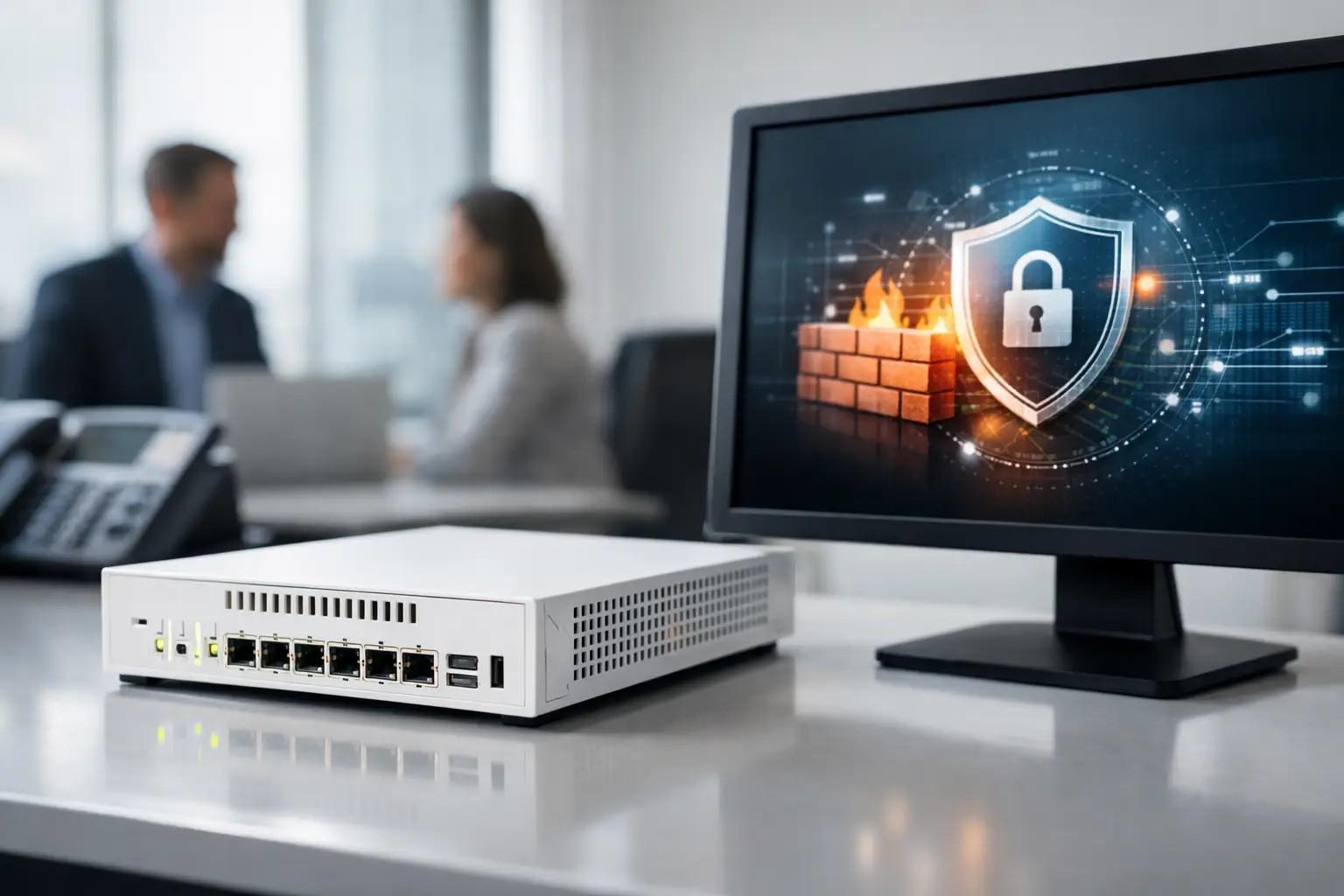
A firewall that only permits or blocks ports is no longer enough. Ransomware operators use encrypted web traffic, stolen credentials, remote-management tools, and trusted cloud services to move through an environment. A Fortinet Next Generation Firewall gives organizations a control point that can identify applications, users, threats, and traffic behavior - not just source and destination addresses.
For small and midsize organizations, the appeal is clear: enterprise-grade security capabilities can be deployed at headquarters, branch offices, data centers, and cloud edges without building a separate product stack for every network function. The value, however, depends on the architecture, licensing, policy design, and operational ownership behind the appliance. Buying hardware alone does not create a managed security outcome.
What a Fortinet Next Generation Firewall Actually Does
Fortinet FortiGate appliances, virtual firewalls, and cloud firewall options are built around FortiOS and Fortinet's security processing architecture. At a practical level, they combine traditional stateful firewalling with application control, intrusion prevention, web filtering, anti-malware inspection, DNS security, VPN, SD-WAN, and network segmentation.
This changes the policy conversation. Rather than allowing broad web access over port 443 because most business applications use HTTPS, an IT team can create policies around known applications, user groups, destinations, risk categories, and acceptable traffic patterns. A finance group may require access to banking platforms and accounting SaaS services, while administrative interfaces, anonymizers, risky file-sharing tools, and newly registered domains can be restricted or monitored.
Encrypted traffic is where next-generation inspection becomes especially relevant. Most business traffic is encrypted, and many attacks are delivered through it. SSL/TLS inspection can expose threats that would otherwise pass through an encrypted session. It also introduces decisions around privacy, certificates, application compatibility, capacity, and regulatory requirements. Inspection should be intentional, documented, and tested rather than enabled broadly without a change plan.
Security controls work best as a policy set
A well-configured FortiGate does not rely on a single signature database or a single deny rule. It applies layers of control. Application control limits unwanted software behavior, intrusion prevention detects known exploit patterns, web and DNS filtering reduce access to malicious destinations, and anti-malware inspection helps identify dangerous content in permitted flows.
Identity context makes those controls more useful. Integrating the firewall with Active Directory, Microsoft Entra ID-related access architecture, LDAP, RADIUS, or multifactor authentication allows policies to reflect business roles instead of static IP addresses. This is particularly useful for privileged access, remote users, contractors, and devices that move between office, home, and branch networks.
Where Fortinet Next Generation Firewall Fits Best
Fortinet is often a strong fit when an organization needs more than perimeter filtering but does not want separate products for firewall, branch connectivity, secure remote access, and WAN optimization. FortiGate can support a distributed environment through site-to-site VPN, secure remote-access VPN, SD-WAN path selection, and centralized policy administration.
For a multi-site business, SD-WAN can steer traffic based on measured link quality, application requirements, and business policy. Voice, video, ERP, and cloud workloads do not all tolerate latency or packet loss in the same way. A properly designed configuration can use multiple internet links more intelligently than a simple primary-backup setup. It can also reduce dependence on costly private WAN circuits where an internet-based design meets availability and performance requirements.
Segmentation is another common use case. Many organizations still operate a flat network where endpoints, servers, wireless networks, backup repositories, operational technology, and guest devices can communicate more freely than they should. Internal firewall zones and policies can limit lateral movement if an account or endpoint is compromised. For example, a user VLAN may access specific application servers but have no direct route to backup systems, domain controllers, or network management interfaces.
Cloud environments need the same discipline. A virtual FortiGate can provide controlled ingress and egress, inspection, VPN connectivity, and segmentation in AWS or Azure. It should be evaluated alongside native cloud security services, routing design, high availability, workload scale, and the operational skills available to support it. A cloud firewall is not automatically the right answer for every workload, but it can be valuable where centralized inspection and consistent hybrid policy are required.
Deployment Decisions That Affect Security and Cost
Sizing a firewall by internet bandwidth alone is a frequent mistake. Published throughput figures can vary dramatically depending on which services are enabled. Stateful firewall throughput, IPS throughput, threat-protection throughput, VPN throughput, SSL/TLS inspection performance, concurrent sessions, and new sessions per second all matter.
A device that handles a 1 Gbps connection comfortably with basic firewall rules may be undersized when full threat inspection and decryption are enabled. Growth plans matter as well. New SaaS platforms, remote staff, internet upgrades, additional branch tunnels, and log retention expectations can change the requirement quickly. Capacity planning should reflect measured traffic, peak use, critical applications, and the security profile the organization intends to enforce.
High availability also deserves more than a checkbox. A firewall pair can reduce the risk of a single appliance failure, but it must be designed with redundant power, switching, WAN connections, routing, synchronization, and tested failover behavior. Some smaller sites may accept a single device with a fast replacement plan. A headquarters, data center, or revenue-critical operation usually has a different tolerance for downtime.
Licensing is another area where commercially transparent planning matters. Fortinet subscription bundles determine access to services such as intrusion prevention, web filtering, anti-malware intelligence, application control updates, support, and advanced cloud-delivered protections. The right bundle depends on the exposure and operating model. Lower-cost licensing may look attractive until a needed security service, support entitlement, or retention capability is missing during an incident.
Operating a FortiGate Is an Ongoing Security Function
The most common firewall failures are operational, not mechanical. Overly broad allow rules, old temporary exceptions, unmanaged VPN accounts, firmware delays, expired certificates, insufficient logging, and policy changes without review can weaken a capable platform.
An effective operating model includes configuration backup, controlled firmware maintenance, security advisory review, rule recertification, administrator access controls, multifactor authentication, and periodic tests of VPN and failover behavior. Logs should feed a SIEM, SOC process, or monitoring platform where suspicious activity can be investigated. A firewall can block known threats, but it also produces signals that may reveal compromised accounts, command-and-control traffic, policy violations, or unexpected data movement.
FortiManager and FortiAnalyzer can help organizations manage policy consistency and reporting across multiple devices. They are particularly useful when branch growth, change volume, audit requirements, or compliance evidence makes device-by-device administration impractical. They also require ownership: centralization improves control only when someone maintains templates, reviews changes, and validates that standards match the real environment.
For organizations subject to NIS2-related governance expectations or sector-specific requirements, firewall management should be tied to documented risk treatment, incident response, access control, vulnerability management, and evidence collection. The technology supports the control framework, but it does not replace governance.
Questions to Answer Before You Buy
A productive firewall assessment starts with the business service, not a model number. Decision-makers should be able to answer these questions before requesting a quote:
- Which applications, sites, cloud workloads, and remote users must remain available during a security event or ISP outage?
- What traffic requires decryption, and what privacy, legal, or compatibility exceptions are justified?
- Which internal networks must be segmented to reduce ransomware spread and protect privileged systems?
- Who will apply patches, review alerts, approve rule changes, and respond when suspicious traffic appears after hours?
- What logs and reports are required for incident investigation, leadership visibility, customer commitments, or compliance reviews?
These answers shape hardware sizing, subscriptions, HA design, logging architecture, and the managed service scope. They also expose where a firewall project depends on adjacent controls such as endpoint detection and response, identity protection, secure email, vulnerability management, immutable backups, and security awareness training.
Make the Firewall Part of a Managed Security Plan
A Fortinet deployment delivers its best return when it is treated as a core component of a broader security and operations program. The firewall should align with endpoint protection, Microsoft 365 and cloud controls, identity governance, backup recovery, SIEM and SOAR workflows, and incident response responsibilities.
AdvisionIT can help organizations evaluate Fortinet architecture, implement the platform, and manage its lifecycle alongside the rest of the technology environment. The practical starting point is an assessment of traffic, applications, current rules, remote access, cloud connectivity, and recovery priorities. That creates a firewall design that supports business growth without hiding security, performance, or operating-cost tradeoffs.
Q&A: What a Fortinet Next‑Generation Firewall Actually Does
1. What does a Fortinet Next‑Generation Firewall (NGFW) actually provide?
A FortiGate NGFW combines traditional stateful firewalling with application control, intrusion prevention, web filtering, anti‑malware inspection, DNS security, VPN, SD‑WAN, and network segmentation. This unified approach allows security policies to be based on applications, users, destinations, and risk categories—not just ports and IPs.
2. Why is encrypted traffic inspection so important?
Most business traffic is encrypted, and many attacks hide inside HTTPS. FortiGate’s SSL/TLS inspection exposes threats that would otherwise pass undetected. It requires intentional planning around privacy, certificates, compatibility, and capacity.
3. How do Fortinet’s security controls work together?
FortiGate applies layered controls:
-
Application control limits unwanted software behavior
-
IPS detects exploit patterns
-
Web/DNS filtering blocks malicious destinations
-
Anti‑malware inspects permitted flows
These controls become more effective when tied to identity context through AD, Entra ID, LDAP, RADIUS, or MFA.
4. When is Fortinet the right fit for an organization?
Fortinet is ideal when a business needs more than perimeter filtering and prefers a unified platform for:
-
Branch connectivity
-
Secure remote access
-
SD‑WAN
-
Centralized policy administration
-
Hybrid cloud inspection
It is especially strong in distributed environments where SD‑WAN improves performance and reduces WAN costs.
5. How does Fortinet improve multi‑site performance?
FortiGate SD‑WAN can steer traffic based on:
-
Link quality
-
Application requirements
-
Business policy
This ensures voice, video, ERP, and cloud workloads receive the performance they need—often outperforming traditional MPLS or basic failover designs.
6. Why is segmentation a critical use case?
Many networks are still flat, allowing excessive lateral movement. FortiGate enables internal zones that restrict access between:
-
User VLANs
-
Servers
-
Backup systems
-
Domain controllers
-
OT networks
-
Guest networks
Segmentation reduces ransomware spread and protects privileged systems.
7. How does Fortinet support cloud environments?
Virtual FortiGate firewalls provide:
-
Controlled ingress/egress
-
Inspection
-
VPN
-
Segmentation
-
Hybrid policy consistency
They should be evaluated alongside native cloud controls, routing, HA, and operational skill sets.
8. What sizing mistakes do organizations commonly make?
Many size firewalls only by internet bandwidth. Correct sizing requires understanding:
-
Threat‑protection throughput
-
IPS throughput
-
SSL inspection performance
-
Concurrent sessions
-
New sessions per second
-
Growth plans
A firewall that handles 1 Gbps with basic rules may be undersized once full inspection is enabled.
9. What does high availability (HA) really require?
HA is more than two firewalls. It requires:
-
Redundant power
-
Redundant switching
-
Multiple WAN links
-
Proper routing design
-
Synchronization
-
Tested failover behavior
Critical sites need stronger HA than small branches.
10. How do Fortinet licensing bundles affect security?
Licensing determines access to:
-
IPS
-
Web filtering
-
Anti‑malware intelligence
-
Application control updates
-
Cloud‑delivered protections
-
Support entitlements
Under‑licensing can leave gaps; over‑licensing can add cost without operational benefit.
11. What operational failures weaken firewalls the most?
Common issues include:
-
Overly broad allow rules
-
Old temporary exceptions
-
Unmanaged VPN accounts
-
Firmware delays
-
Expired certificates
-
Insufficient logging
-
Unreviewed policy changes
A FortiGate is powerful, but it requires ongoing governance.
12. How do FortiManager and FortiAnalyzer help?
They provide:
-
Centralized policy management
-
Template‑based configuration
-
Fabric‑wide reporting
-
Change tracking
-
Compliance evidence
They are essential for multi‑site environments or regulated organizations.
13. What questions should be answered before buying a firewall?
Decision‑makers should clarify:
-
Critical applications and sites
-
Decryption requirements
-
Segmentation needs
-
Operational responsibilities
-
Logging and reporting expectations
These answers shape hardware sizing, HA design, licensing, and managed‑service scope.
14. Why should a firewall be part of a managed security plan?
A FortiGate delivers maximum value when aligned with:
-
Endpoint protection
-
Identity governance
-
Cloud controls
-
Backup recovery
-
SIEM/SOAR workflows
-
Incident response
A firewall is a core control, not a standalone solution.
Date: 22.07.2026

Written By
Yavor Y. Zlatev
CEO & Executive Director at Advanced Vision IT
Yavor leads strategic growth and technology operations at Advanced Vision IT, specializing in enterprise cybersecurity, cloud infrastructure, NIS2 compliance, and managed security service delivery. Find out more about me