Acronis vs Datto: Which Is Better for Customers?
A backup platform only proves its value when a user cannot work, a server will not boot, or ransomware has reached production data. That is why the Acronis vs Datto: Which Is Better for Customers question should not be answered by feature lists alone. The better choice depends on what must be recovered, how quickly operations must resume, whether security controls are part of the requirement, and who will own daily monitoring.
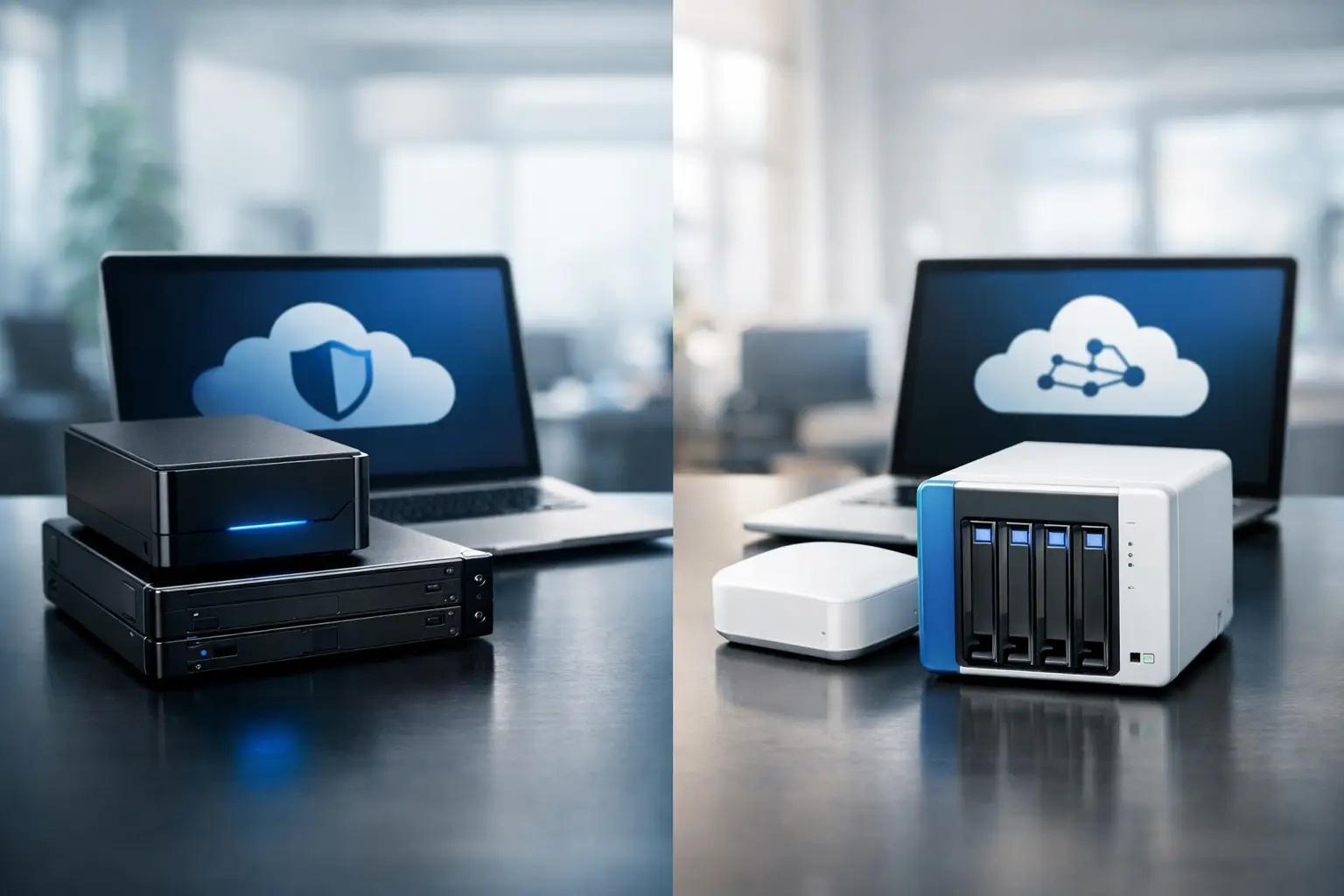
Both vendors address serious business continuity needs, but they approach the problem differently. Acronis is generally strongest when an organization or managed service provider wants backup, endpoint protection, and centralized cyber protection in one operating model. Datto is often compelling for organizations that prioritize business continuity and disaster recovery, particularly for protected servers, appliances, and recovery workflows managed by an MSP.
Start With the Recovery Outcome, Not the Product Name
Before comparing licenses, establish the recovery objectives. A small professional-services firm may need Microsoft 365 data retained and restored quickly after accidental deletion. A manufacturer may need a line-of-business server restored within hours. A regulated organization may need immutable copies, documented testing, audited retention, and a recovery process that supports governance obligations.
Recovery point objective, or RPO, defines how much data the business can afford to lose. Recovery time objective, or RTO, defines how long a system can remain unavailable. These two measures should shape the platform decision more than a headline storage allocation or promotional price.
Acronis and Datto can both support sound backup strategies, but neither replaces recovery design. Critical workloads need application-aware backups, appropriate retention, protected credentials, tested restoration procedures, and clear ownership. A backup that completes successfully but cannot restore Active Directory, SQL Server, Microsoft 365 data, or a business application is not a continuity plan.
Where Acronis Fits Best
Acronis Cyber Protect is designed around the idea that backup and cybersecurity belong in the same operational conversation. Depending on the selected licensing and service design, it can combine endpoint backup with anti-malware capabilities, vulnerability assessment, patch management, device management, and recovery functions through a centralized console.
That combination is valuable for customers with distributed endpoints, limited internal IT capacity, or a desire to reduce tool sprawl. Rather than operating a backup console, endpoint security console, patching tool, and management platform as isolated services, teams can align protection policies and operational visibility more closely.
Acronis is particularly suitable when the environment includes a mixture of Windows endpoints, servers, virtual workloads, Microsoft 365, and cloud resources. It is also a practical fit where MSPs need multitenant administration, standardized protection policies, and billing that can be aligned to monthly managed-service bundles.
The trade-off is that breadth requires disciplined configuration. Customers should decide which security capabilities are included, how alerts enter the SOC or service desk, whether an existing EDR platform remains in place, and who reviews failed jobs and threat events. Buying an integrated platform does not automatically create an integrated operating process.
Where Datto Fits Best
Datto has built much of its reputation around business continuity and disaster recovery. Its approach is attractive when recovery of critical servers is the central requirement and when local backup, offsite replication, virtualization, and tested recovery workflows are expected parts of the service.
For an organization that cannot tolerate extended downtime from a failed physical server, corrupted virtual machine, or site-level incident, Datto's BCDR-oriented model can be a strong choice. Local recovery options can reduce dependence on internet bandwidth during an urgent restoration, while offsite copies support recovery from a more serious facility or infrastructure event.
Datto is commonly delivered through managed service providers, which can be an advantage for customers that want a partner to own alerting, job remediation, recovery testing, and escalation. The platform is often most persuasive when it is attached to a clearly defined continuity service rather than sold as an appliance alone.
The limitation is scope. Datto may be the better answer for server-centric BCDR, but it is not automatically the best single platform for every endpoint security, patching, Microsoft 365 protection, or cloud workload requirement. Customers may still need separate security controls and operational tools, which is reasonable if those products are intentionally integrated and managed.
Acronis vs Datto for Ransomware Resilience
Ransomware resilience is more than keeping a copy of data. Attackers may target backup credentials, delete recovery points, encrypt network shares, or remain dormant long enough to contaminate recent backups. The protection design should account for identity security, privileged access, immutable or protected backup copies, monitoring, retention, and recovery validation.
Acronis has a natural advantage for buyers looking to place backup and endpoint threat protection under one policy framework. This can improve response coordination when a suspicious endpoint event and a backup issue occur at the same time. It also gives smaller IT teams a more consolidated view of cyber protection activity.
Datto's strength is its continuity orientation: preserving recoverable systems and providing practical pathways to restore operations. For customers with mature endpoint security already deployed, that focus can be exactly right. A company using CrowdStrike, Sophos, Microsoft Defender, or another established EDR service may prefer not to replace its security stack simply because it is evaluating backup.
Neither approach eliminates the need for incident response planning. Define who can authorize a recovery, how clean restore points will be identified, how credentials will be reset, and how restored systems will be segmented before they return to production.
Management, Monitoring, and Day-Two Operations
The operational model is where many purchasing decisions succeed or fail. A platform may have excellent capabilities but still underperform if nobody monitors alerts, investigates repeated job failures, validates capacity, or performs restoration tests.
Acronis usually favors customers seeking centralized administration across many protected devices and services. It can fit managed environments where endpoint management, patching, backup, and cyber protection are coordinated by one provider. This is useful for businesses that want fewer operational handoffs between their IT support, security, and backup teams.
Datto is well suited to MSP-led continuity operations, especially where a provider already has standardized BCDR runbooks. Customers should ask how often recoveries are tested, whether test results are documented, what happens after-hours, and whether the provider monitors only backup success or actual recoverability.
For either platform, insist on service-level clarity. Monthly reporting should show protected assets, backup success trends, unresolved failures, retention status, test recoveries, and material risks. Executives need business-readable reporting, while IT leaders need the technical detail to take action.
Cost Is About Scope and Recovery Risk
A lower per-device price can become expensive when it leaves essential requirements outside the service. Conversely, paying for overlapping endpoint tools may not be justified if the organization already has a well-managed security stack.
Acronis can create economic value when its combined capabilities allow a customer to consolidate tools and vendor management. It may be less attractive if the organization needs only specialized BCDR for a limited number of critical servers and already pays for mature security and device-management services elsewhere.
Datto can justify a higher continuity-focused investment where downtime costs are significant and local recovery is a requirement. Consider the financial impact of a day without the ERP system, file services, production scheduling, or customer applications. That number provides a more meaningful comparison than the monthly appliance or subscription fee.
Also evaluate implementation and management costs. Migration of backup sets, retention policy design, bandwidth planning, application testing, and documentation all require time. A quote should explain what is included, what is optional, and what the customer remains responsible for.
Which Platform Is Better for Your Customers?
Choose Acronis when the priority is a broader cyber protection model that brings backup together with endpoint-oriented security and management capabilities. It is a strong fit for distributed organizations, mixed endpoint and server estates, and customers that want one managed partner accountable for protection across multiple operational layers.
Choose Datto when business continuity and rapid recovery of critical systems are the dominant requirements, especially where local recovery and established BCDR processes matter more than consolidating security tooling. It can be an excellent choice for server-dependent businesses with a managed provider prepared to test and operate the recovery plan.
Many environments do not need an either-or answer across every workload. A company may use a BCDR-focused service for its most critical servers while using a broader endpoint and Microsoft 365 protection strategy elsewhere. The right architecture follows workload criticality, compliance requirements, existing security investments, and the people available to manage the result.
At AdvisionIT, the practical starting point is a recovery and security assessment that maps critical systems, dependencies, RPOs, RTOs, existing controls, and operational ownership. The goal is not to force one product into every environment. It is to build a backup and recovery service that remains usable when the business needs it most.
Acronis vs Datto — Recovery‑Driven Q & A
1. Why should backup platform selection start with recovery outcomes
Recovery outcomes — Because RPO and RTO define business impact, continuity requirements, and acceptable data loss—not product names or promotional pricing.
“Recovery point objective… defines how much data the business can afford to lose. Recovery time objective… defines how long a system can remain unavailable.”
2. Why do different industries require different recovery designs
Industry differences — Professional services need fast M365 restores; manufacturers need rapid server recovery; regulated organizations need immutability, testing, and audited retention.
“A regulated organization may need immutable copies, documented testing, audited retention…”
3. Why backup success does NOT equal recoverability
Backup vs recovery — Critical workloads require application‑aware backups, protected credentials, tested restoration, and clear ownership.
“A backup that completes successfully but cannot restore Active Directory… is not a continuity plan.”
4. Where does Acronis fit best
Acronis fit — When backup, endpoint security, patching, vulnerability assessment, and device management need to operate under one unified console.
“Acronis Cyber Protect is designed around the idea that backup and cybersecurity belong in the same operational conversation.”
5. Why is Acronis strong for distributed endpoints and mixed environments
Distributed environments — Unified policies across Windows, Linux, servers, VMs, M365, and cloud workloads reduce tool sprawl and simplify MSP operations.
“It is particularly suitable when the environment includes a mixture of Windows endpoints, servers, virtual workloads, Microsoft 365…”
Date: 19.08.2026

Written By
Yavor Y. Zlatev
CEO & Executive Director at Advanced Vision IT
Yavor leads strategic growth and technology operations at Advanced Vision IT, specializing in enterprise cybersecurity, cloud infrastructure, NIS2 compliance, and managed security service delivery. Find out more about me